The EU’s approach to the Western Balkans demands a recalibration. If the EU addresses some challenges, it can navigate enlargement fatigue and foster a more positive and impactful relationship with accession countries. Addressing disinformation, communicating at the local level of what the EU delivers, direct funding for citizens to ensure efficient use of funds, supporting SME’s to combat demographic decline are just a few recommendations from Renew Europe CoR following on the European Commission’s Enlargement package and the annual Joint Consultative Committees (JCCs) and Working Groups (WGs) on Western Balkans of the European Committee of the Regions.
One key challenge is the EU’s per perceived invisibility of EU projects on the ground. Often associated with bureaucratic processes and stringent conditionality, these initiatives have been used as an excuse for stagnation in the enlargement process and blamed for increasing enlargement fatigue and Euroscepticism. In the Western Balkans, the EU faces competition from China, Russia, and the Gulf states, who make their investments and presence much more visible, with nominally fewer strings attached, but plenty of untransparent conditions and long term risks undermining the recipient country’s autonomy, or going directly against the EU objectives and values.
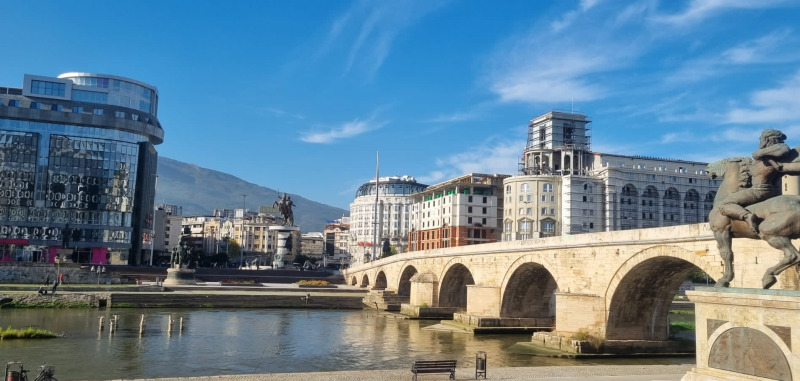
The case of a waste management plant in North Macedonia, co-funded by the EU, blocked however by citizens for a considerable amount of time due to fake news that this will make them an official dumpsite for EUs waste, demonstrate how the lack of clear communication by the EU opens up space for fake news and disinformation. Individual actions by certain EU Member States, such as the refugee processing center for Italy that is being opened in Albania, do not help the general image of the EU in the region either.
Strong support for EU as top donor remains
But engaging with students and youth in the region reveals a strong pro-European orientation, though the pace of changes and improvements in living conditions and opportunities must align with expectations. The risk is that if progress is not swift enough, the younger population keeps leaving the countries, exacerbating demographic trends and leaving behind a more susceptible demographic to Eurosceptic populism.
And enlargement fatigue is not limited to citizens; even local politicians exhibit signs of weariness, evident also in their diminished participation in our partnership fora. Those holding onto the European dream feel their hands are tied, unable to access crucial EU funding, as for example the Technical Assistance and Information Exchange (TAIEX) capacity-building projects. These projects, if enlarged in scope to include local and regional authorities, could contribute to the efficient implementation of the accession process and make the EU more present in the region already today by enhancing capacity building and technical assistance.
The enlargement process cannot be a mare box ticking exercise, it requires a profound change in the mindset of local, regional and national politicians away from victimisation towards objectivity and constructive approach to the future – rather than the past. The EU remains the top investor with a €6 billion Growth Plan for the Western Balkans, as well as an important trading partner and this should be made very clear to the citizens of the Western Balkans to foster a more positive and impactful relationship. And that is why Renew Europe CoR is stepping up its collaboration with liberal partners in the region, namely with a new joint project with the Friedrich Naumann Foundation, as well as collaboration with LIBSEEN and liberal parties in those countries and their Mayors.