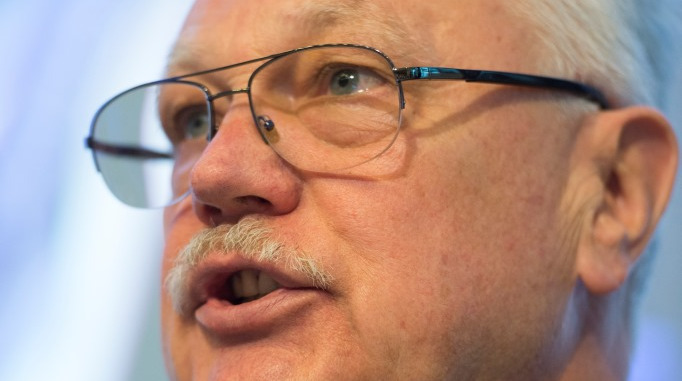
Macro-regional strategies promote regional development; representing a real and deeply European vision. Developing transnational clusters offers a strong potential and unique innovative way to promote cooperation between the EU and between the EU and its neighbours, says our rapporteur Dainis Turlais Macro-regional strategies (MRS) became excellent tools for bottom-up territorial coordination through which the combined potential of Macro-regions can be used more effectively, as proven by the Danube basin. Turlais: “Macroregional strategies are improving public services, natural resource management, innovation strategies and many other aspects in the life of involved local communities”.
Dainis Turlais:
“I would like to come forward with my idea of the magic triangle, which could be our new success formula. This triangle is made of three sides: academia and science on one side, entrepreneurs, who use the scientific achievements and turn them into products, on the other side, and local and regional governments, who play connecting role and provide infrastructure for the stakeholders, on the third side.”
The rapporteur emphasizes the need to further integrate MRS and the European Union’s sectoral policy programmes such as Horizon 2020, Erasmus+, Creative Europe,…to ensure synergies, and to ensure greater coordination, not only between countries and within each country, but also at the EU level.
Dainis Turlais:
MRS relate to many policy areas and their development is not exclusively linked to EU policy on territorial cooperation. MRs would therefore benefit from greater coordination between the different funding instruments available to them and managed by different European Commission departments.
Turlais calls on the European Commission:
- to develop measures to further promote clusters’ work and of inter-cluster cooperation, by boosting the regional dimension of clusters and organise better coherence and synergies in their regional approach
- to support transnational cooperation more in its clusters policy, for example by helping to organise events to find international partners
- to develop a smart specialisation strategy for the Danube macro-region taking into account the specific strengths and needs of the region
- the imitation of a systematic exchange of experiences, information and data with other MRS
Beyond the border
In the context of the UK’s withdrawal from the EU, MRS can also contribute to integrated development beyond the EU’s borders. Turlais suggests exploring how MRS could contribute to building the future relationship between the UK and the EU, demanding that local and regional authorities be closely involved in further discussions on this issue.
As clusters play an important role as centres where there is a concentration of skills, it is a promising way to strengthen a region’s innovative capacities, which is why cross-border or trans regional cooperation between cluster organisations shouldn’t be restricted to Europe alone but should instead be global, bringing together EU regions, member states and if necessary third countries.
MRS represent a deeply European vision, having great potential and innovatively promote working together to achieve shared goals. These goals are important for European citizens regardless of the country or region they live in. They also provide opportunities for genuine multi-level governance from local authorities to the European Commission. These strategies provide real opportunities for multi-level governance without creating red tape while bridging the gap between EU and local policy-makers as they involve directly the representatives of cities and regions. In addition, they can make a significant contribution in closing the gap in living standards between neighbouring areas within a reasonable period of time
“Macroregions can be an excellent tool for bottom-up territorial coordination, involving all levels of government without creating new red tape” says Dainis Turlais: https://t.co/m86orjoGp5. pic.twitter.com/jZ9pOXBYPA
— ALDE-CoR (@ALDE_CoR) 27 March 2019