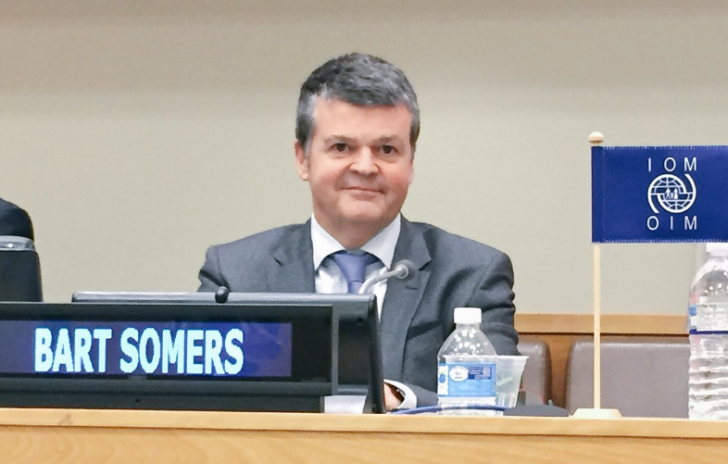
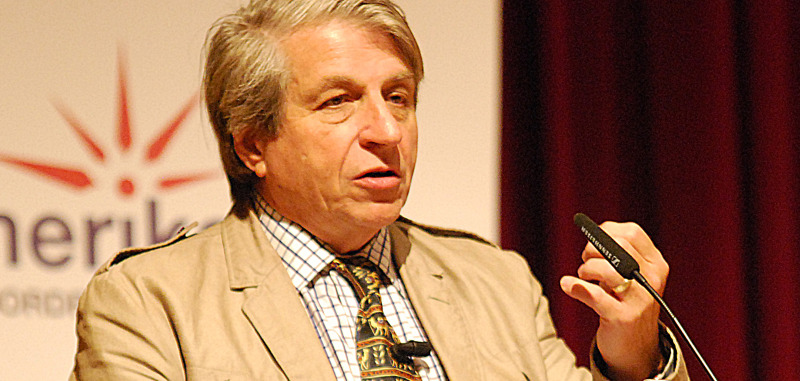
Bart Somers, 2016 World Mayor prize winner, pays tribute to Dr Benjamin Barber, author of If Mayors Ruled the World, and founder of the Global Parliament of Mayors
“Barber was an inspiration to mayors all over the world. He understood that in a world where more than half of the population lives in cities, finding solutions to the challenges of this century must involve city mayors. And with his characteristic energy and passion he set in place the foundations of this new global governance. It is now up to city mayors to ensure his ideas live on.
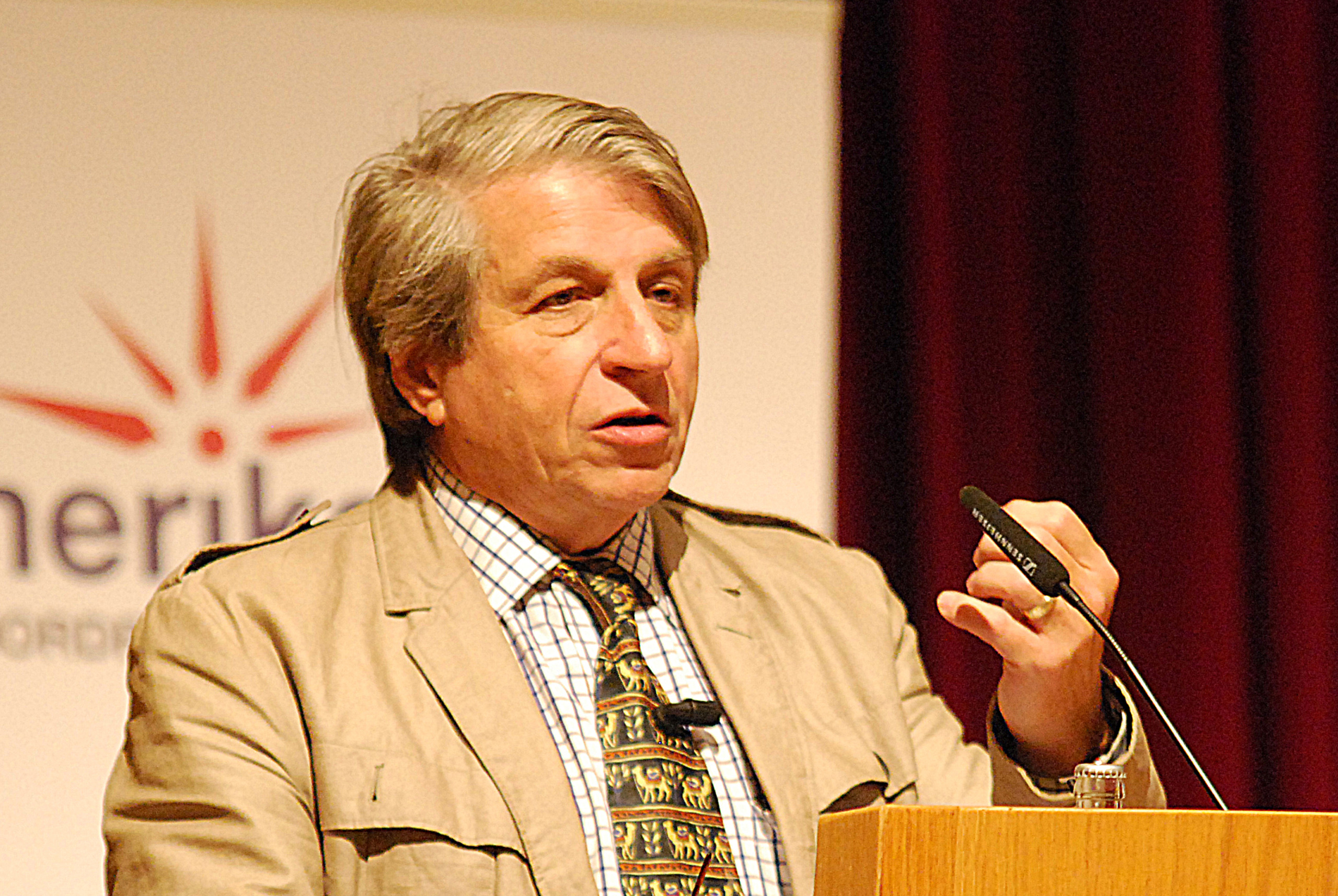
Benjamin Barber inspired Mayors from all around the world. Bart Somers salutes one of the staunchest supporters for Mayors in an op-ed in Belgian newspaper De Standaard.
Give me a city and I’ll change the world
De Standaard – 29 April 2017 | Page 42
With the death of the American political scientist Benjamin Barber, mayors everywhere and everyone working for the good of cities has lost a passionate advocate. In uncertain times, in which major global politics dominate the headlines, I will continue to stand up for the role of local politics as a unifying force.
The city or municipality is sometimes described as the “lowest” tier of governance. I prefer to consider it the “first” level of government: it is the place where everyone feels at home. The city is the place of everyday life: where we live, work and are free – sometimes together with many people in an incredible and growing diversity. The first and most important task of a mayor is perhaps to make that living together possible in a tangible way. The practical results of decisions taken are felt quickly.
When stories appeared about young people in Flanders travelling to Syria, I wanted to know the situation in my city of Mechelen in order to take practical action. I could not sit back and wait for the Flemish or federal government. Or when I heard at the school gate that children were going to school with empty lunchboxes, I made child poverty a priority issue in my city. With new solutions, things can work.
Mijn afscheid van en hommage aan Benjamin – If mayors ruled the world – Barber. Vandaag in @destandaard. Want de toekomst is voor de stad. pic.twitter.com/lTTI5CxTp0
— Bart Somers (@BartSomers) April 29, 2017
Trenches vs bridges
In his acclaimed book If mayors ruled the world, Benjamin Barber explains that this is what differentiates local and national politics.
A mayor is not there primarily to develop abstract ideas or to demarcate ideological divisions, but rather to solve the problems of real people. That is why local politicians take a more pragmatic approach. After elections, they look for what connects people. This approach is often diametrically opposed to national politics, which focuses more on ideological and policy differences. In parliaments and governments, the people and their concerns are often something abstract, but a mayor looks the people in the eye every day. In national politics, walls and trenches can go down well, but a local politician knows that he or she must primarily build bridges.
Benjamin Barber taught us that globalisation has also changed the nature of local politics. Cities are becoming hugely diverse with people from all corners of the globe. And they bring new networks, other perspectives and also new challenges. The role of the city as an “emancipation factory”, a place where social mobility must be more than a slogan, and as an area of freedom and justice has come increasingly to the fore. A new sense of belonging is being forged here.
This week I met with local politicians from Lebanon to talk about the reception of refugees. In Mechelen, we have managed to welcome 200 refugees, with much goodwill. Some of my Lebanese colleagues, however, have had to cope with an influx of tens of thousands of displaced people, a multiple of their own populations. Respect is the only response here, but what also emerges is a form of solidarity across borders: that each of us has a universal humanitarian responsibility. Barber had a lovely word for this: “interdependence”.
In fact we must have the courage to realise that the hierarchical system of nation states and bureaucratic international institutions is now somewhat outdated. Support for this system is rapidly waning. In a connected society, knowledge is everywhere and is cross-cutting and spread across the board. Imposing an idea or vision no longer works, unless you are relying on dangerous populism.
.@BartSomers pays tribute to @BenjaminRBarber author of If Mayors Ruled the World, founder @gpmayors who passed away https://t.co/BCFSCEty0i pic.twitter.com/7rFCD53NLl
— ALDE-CoR (@ALDE_CoR) April 26, 2017
Global parliament of mayors
It is more important than ever for local politicians to train others and thus to offer a response. Hence the importance of participatory democracy. The input from the bottom up is of equal value to that from elected representatives and administrations. These days, citizens’ groups and interest groups are often better informed and more technically equipped than officials. Let’s use that knowledge. You see the same thing in the business world, which is increasingly moving away from vertical structures and where responsibility increasingly lies with self-regulating teams. Connecting people – this is what it is all about. National governments have not got there yet.
For this reason, the visionary Mr Barber called the local level the policy level of the twenty-first century. His insights have inspired me to call for greater decision-making powers and financial resources for local authorities. Ultimately, they often know best how specific problems and challenges can be tackled from extensive grassroots knowledge and a broad understanding of the local situation. Climate change, migration, inequality of opportunity, these are all areas in which cities can take the lead. Barber’s last initiative – setting up a global parliament of mayors – might well be the new hope for our democracy.
Bart Somers